

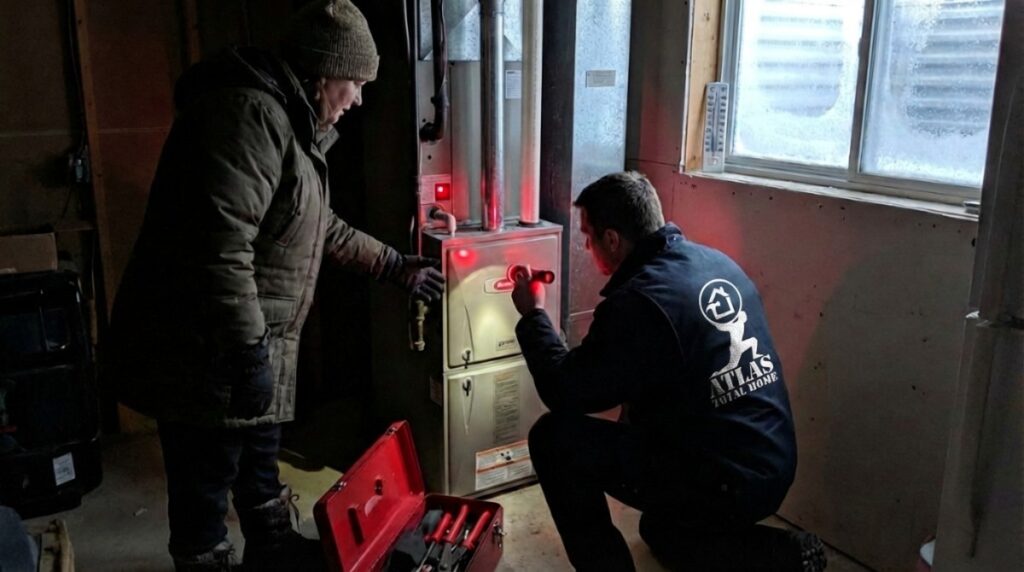
Furnace died in sub-zero weather? Don’t panic. Follow these emergency steps to troubleshoot, prevent frozen pipes, and stay safe until help arrives.
A silent furnace during an Illinois winter is not just uncomfortable. It is a financial and safety emergency.
When temperatures drop below zero in Vermilion County, your home loses heat rapidly. Every hour you wait increases the risk of frozen pipes and thousands of dollars in water damage.
First, if your furnace dies in sub-zero weather, call Atlas Total Home for immediate HVAC service today in Danville, Westville, Tilton, and the entire Vermilion County area.
Do not panic. Follow this guide to stabilize your home, troubleshoot the problem, and protect your property while you wait for help.
Stabilizing Your Home Temperature
You must immediately seal your home to trap existing heat inside. Your house operates as a system. If the heat source fails, the “envelope” (walls, windows, doors) becomes your only defense against the cold. Stop the heat loss now.
Take these specific steps:
- Close all doors: Shut doors to unused rooms like guest bedrooms or storage areas. Conserve heat in the main living space.
- Cover windows: Close blinds and curtains. If you have heavy blankets, hang them over large windows to add insulation.
- Stop drafts: Place rolled-up towels at the bottom of exterior doors to block cold air from entering.
3 Checks Before Calling for Emergency Service
Perform these three specific checks to potentially fix the issue yourself and avoid an emergency dispatch fee. Many “broken” furnaces are simply reacting to a safety switch or a minor error you can correct in minutes. Before you search for emergency furnace repair in Danville IL, try this troubleshooting guide.
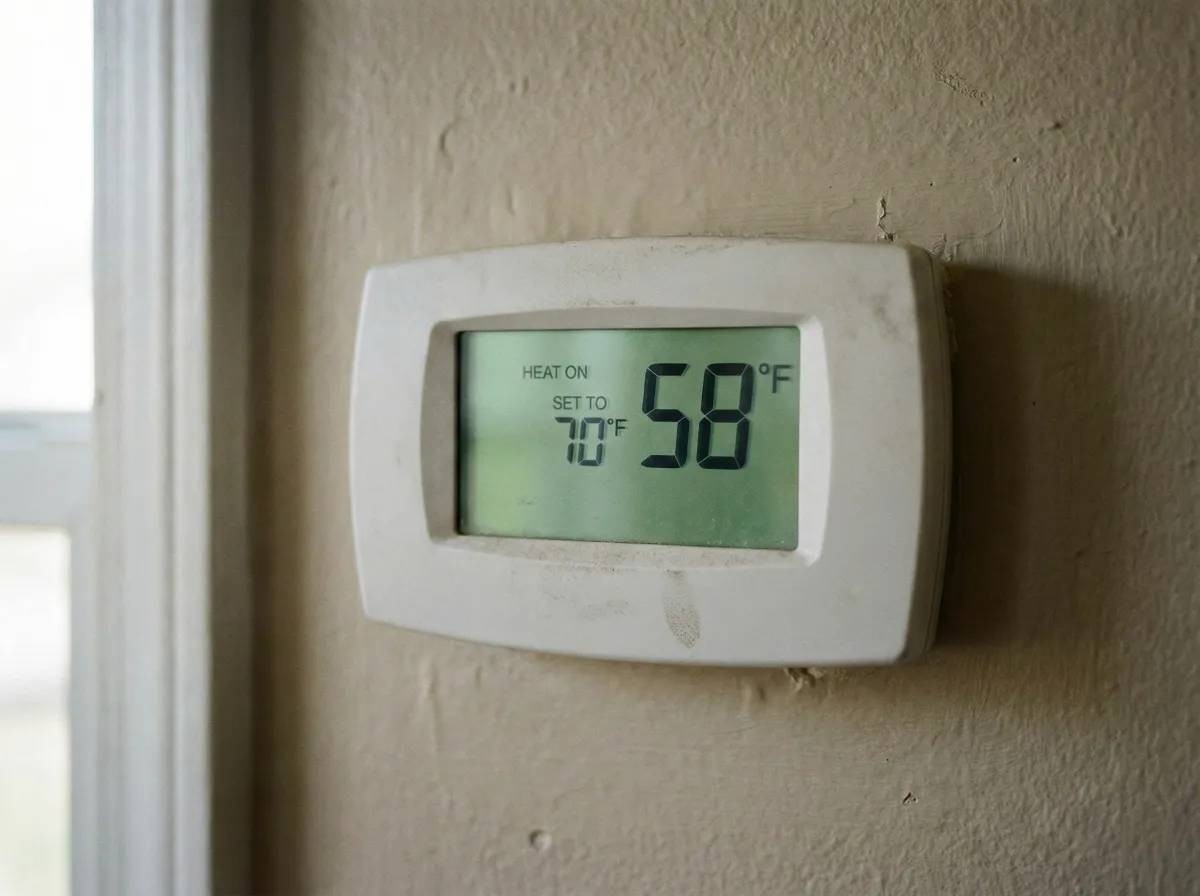
Inspecting the Thermostat and Emergency Shut-Off Switch
Ensure your thermostat is set to “Heat” with the temperature set at least 5 degrees above the current room temperature. Sometimes, the settings get bumped, or the batteries die. Replace the batteries if the screen is blank.
Next, locate the emergency shut-off switch. This looks like a standard light switch, usually located on the side of the furnace or on a nearby wall. It often has a red faceplate. If this switch was accidentally bumped to “Off,” your furnace will not run. Flip it back to “On.”
Verifying Airflow and Filter Status
Pull out your furnace filter immediately and replace it if it is gray or clogged with dirt. A dirty filter blocks airflow. When air cannot move, the heat exchanger overheats, and the furnace triggers a safety shutdown to prevent a fire. This is the most common cause of heating failure.
If you need professional help to identify the problem, our team handles full furnace repair and replacement to get your system running again.
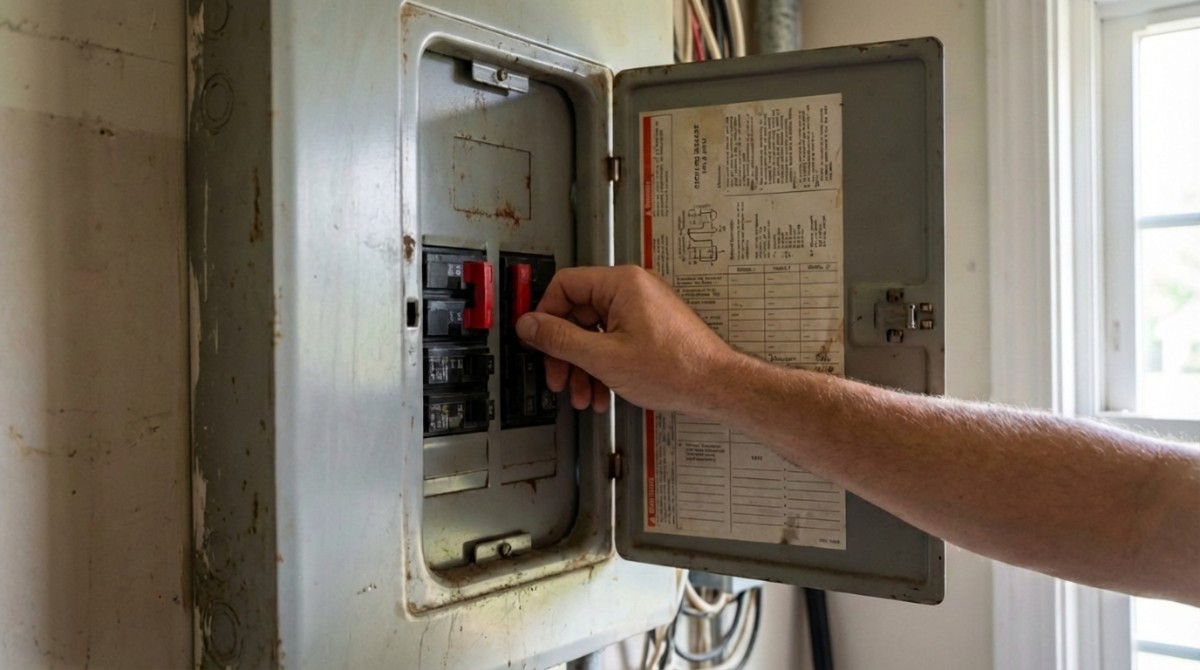
Checking the Circuit Breaker Panel
Locate your electrical panel and look for the breaker labeled “Furnace” or “HVAC” to see if it has moved to the “Off” or center position. If a power surge occurred, the breaker will trip to protect the unit. To reset it, flip the switch all the way to “Off,” then firmly back to “On.”
How to Prevent Pipes from Freezing in Illinois Winter
Keep water moving through your plumbing lines and expose pipes to warm air to prevent them from bursting. A broken furnace is bad, but a flooded basement is worse. Water damage from a burst pipe can cost you over $10,000 in repairs and ruined belongings.
Understanding how water freezes in your home is critical to stopping it. We visualized the process to help you act fast.
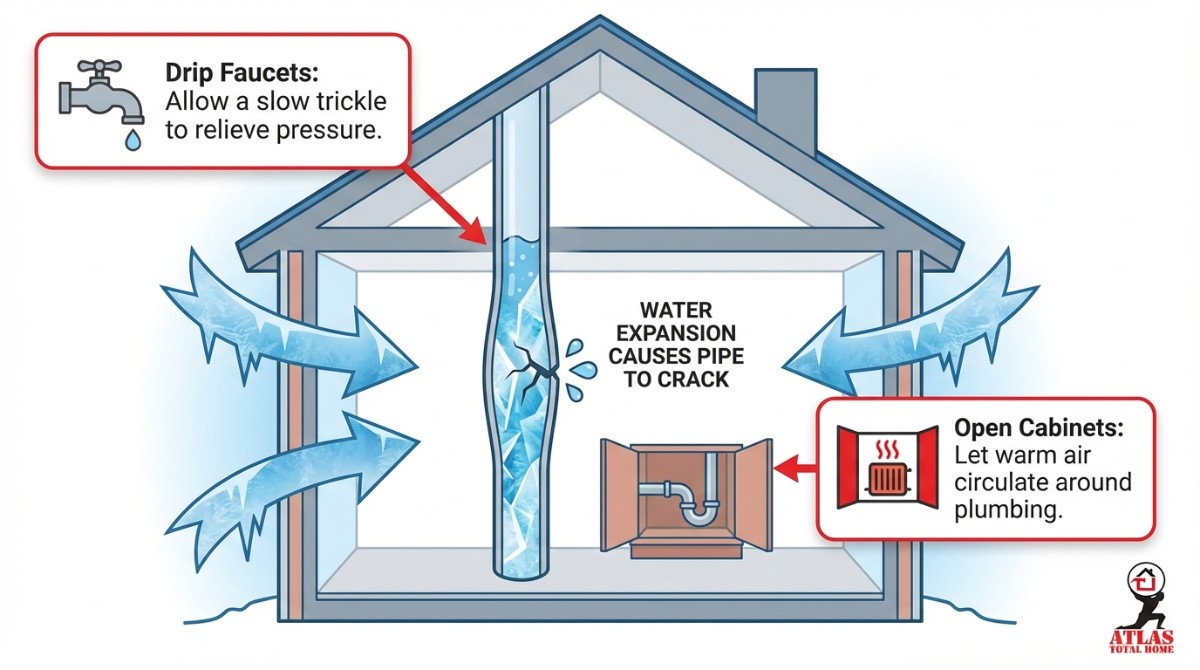
This graphic shows that standing water freezes faster than moving water. When you let a faucet drip, you relieve pressure and make it harder for ice to form.
Take these actions immediately:
- Drip faucets: Turn on the cold and hot water faucets to a slow drip, especially on sinks located against outside walls.
- Open cabinet doors: Open the doors under your kitchen and bathroom sinks. This allows the remaining heat in your house to reach the pipes.
- Shut off exterior water: If you have not already, turn off the water supply to outdoor spigots and drain the lines.
If you are already dealing with a burst pipe or water intrusion, you need our cleaning and restoration services to mitigate the damage immediately.
Safe Heating Alternatives While You Wait for Repair
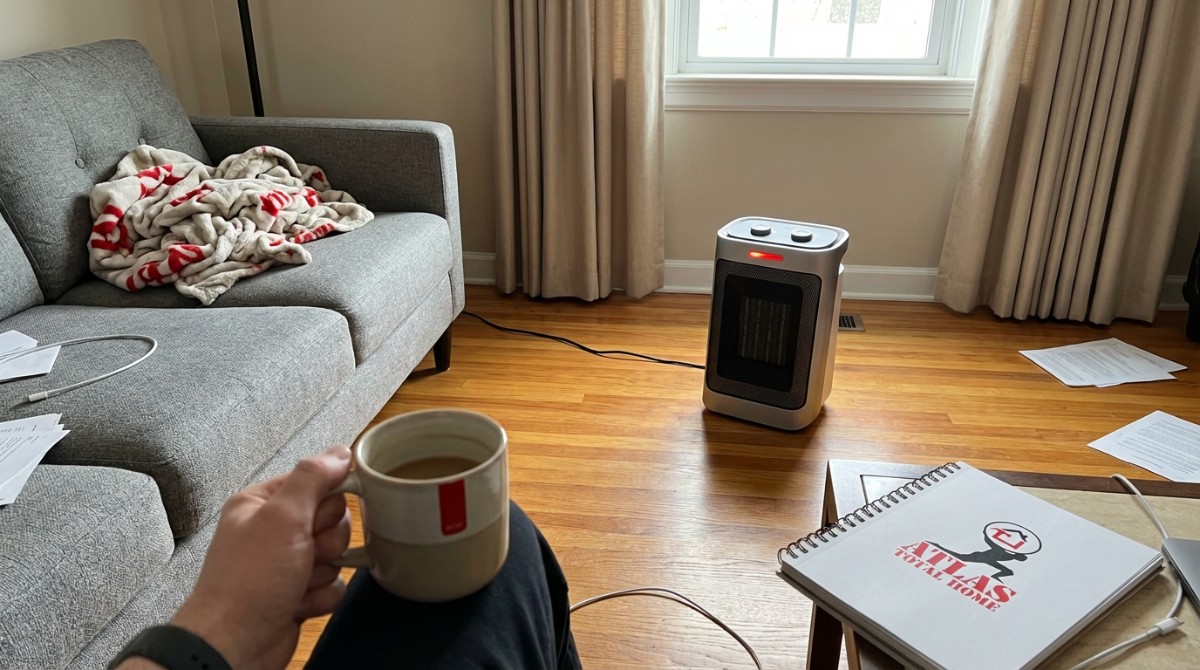
Use electric space heaters or wood-burning fireplaces safely, but never use gas ovens or charcoal grills indoors. Desperation can lead to dangerous choices. Carbon monoxide is a silent killer, and using an oven to heat your home significantly increases this risk.
Review this safety comparison before choosing a backup heat source:
| Heat Source | Safety Status | Critical Warning |
|---|---|---|
| Electric Space Heater | Safe | Keep 3 feet away from curtains and furniture. Plug directly into the wall. |
| Wood Fireplace | Safe | Ensure the flue is open and the chimney is clean. |
| Gas Oven/Stove | DANGEROUS | Never use. High risk of Carbon Monoxide poisoning. |
| Propane/Charcoal Grill | DANGEROUS | Never use indoors. Deadly fumes build up instantly. |
Keeping your home well-insulated helps these temporary measures work better. Proper energy efficiency upgrades keep the heat inside where it belongs, even during an emergency.
Why Choose Atlas Total Home for 24/7 Emergency Restoration and Repair
We provide 24/7 HVAC repair in Vermilion County with certified technicians who live locally and understand the urgency of sub-zero failures. National chains often put you in a queue with a call center hundreds of miles away. We are right here in Danville.
You need a partner who treats your home as a complete system. We do not just fix the furnace; we look for the root cause and help you prevent secondary damage like frozen pipes. When the heat goes out, time is your enemy. Do not wait.
Please contact us immediately if your heating system has failed and the temperature is dropping.
Prevention Strategy: Seasonal Combustion Safety Checks
Schedule an annual combustion analysis to catch efficiency drops and safety hazards before they cause a mid-winter breakdown.
Most furnace failures happen on the coldest days of the year because that is when the system works the hardest. If your furnace is old or neglected, it will struggle to keep up.
We test your system to ensure it burns fuel safely and effectively. This prevents carbon monoxide leaks and sudden shutdowns. Regular HVAC maintenance is the cheapest way to avoid an expensive emergency repair bill.
