

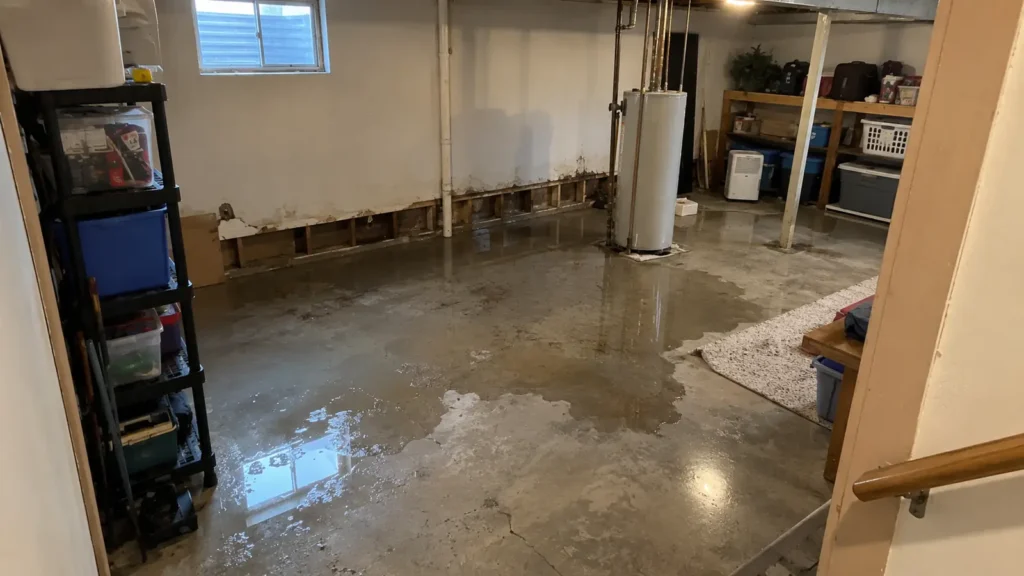
If your basement has flooded, keep everyone out of the water until you know it’s safe to go in. Don’t walk through it to reach the breaker panel, unplug a sump pump, or save your belongings.
You may be looking at wet carpet, damaged walls, or boxes you can’t get to. Start by making sure everyone is safe, stopping the water if you can reach the shutoff safely, and calling for cleanup help.
Atlas Total Home offers 24/7 water damage restoration in Danville, Westville, Tilton, and Vermilion County. If you need help with a flooded basement, call and tell us what’s happening.
What to do first when your basement floods
Keep children and pets away from the basement. If local officials tell you to evacuate, follow their instructions.
- Stay out of standing water. Water near wiring, outlets, or appliances can put you at risk of electric shock. Turn off the power only if you can reach the shutoff from a dry place. Otherwise, call an electrician or your utility.
- Leave the house if you smell gas or see damaged walls or floors. Call emergency services or your gas utility from outside. Don’t flip switches or use anything that could cause a spark if you suspect a gas leak.
- Shut off a leaking pipe if you can do it safely. Closing the main water valve can stop water from a burst supply pipe. If you have to cross standing water to reach it, leave it to a professional.
- Call for cleanup help. Get professional help if water has soaked into carpet or walls, sewage may be involved, or water keeps coming in.
- Take photos from a safe spot. Note when you found the water and contact your insurance company. Don’t go into an unsafe basement to take pictures.
Can you clean it up yourself or should you call a professional?
You may be able to handle a small spill from a clean water source on bare concrete. The leak needs to be stopped, the area must be safe to enter, and you need to dry everything that got wet.
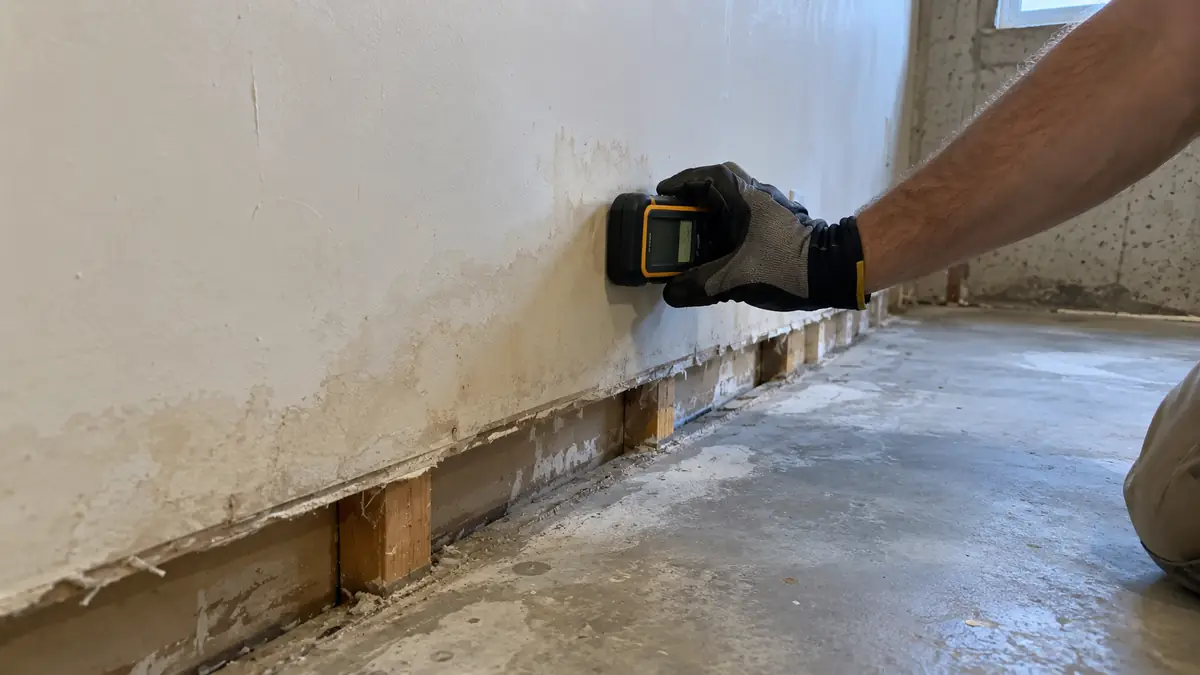
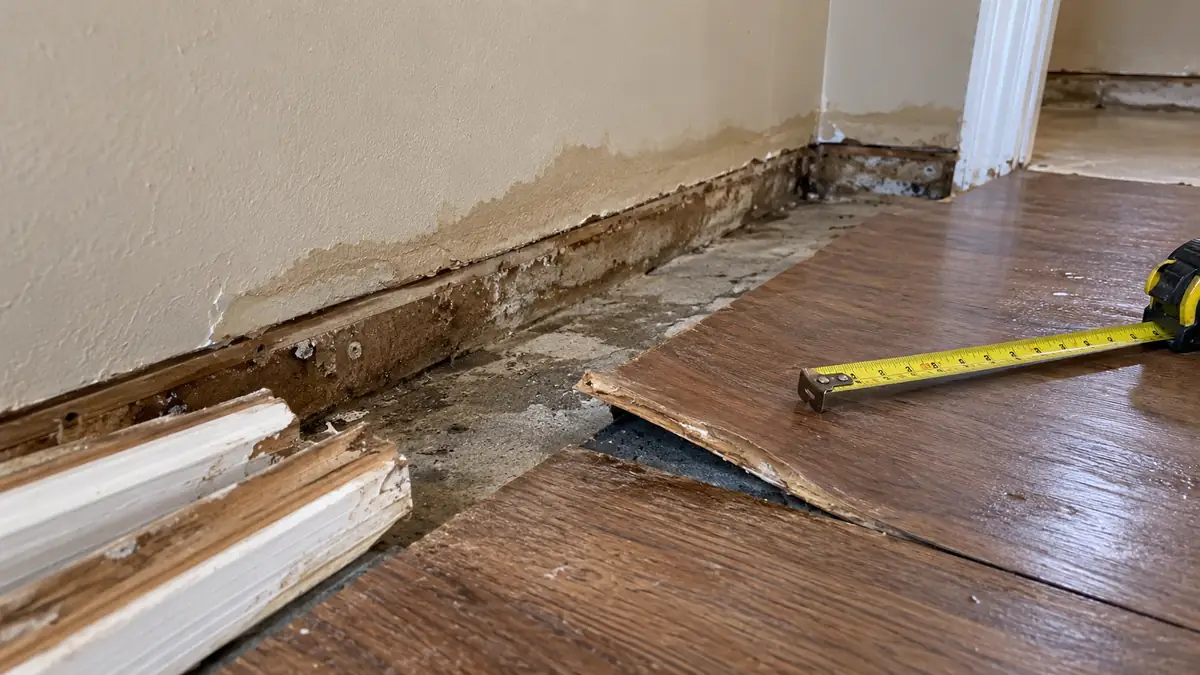
Call a water damage professional if water has soaked into carpet, drywall, trim, or cabinets. A shallow puddle can still leave water under the floor or inside a wall.
If you don’t know where the water came from, don’t assume it’s clean. The EPA recommends professional help for damage caused by sewage or other contaminated water. Don’t turn on fans until the water has been checked for contamination.
Find out where the water is coming from
You need to fix the cause of the flooding so more water doesn’t come in during cleanup. Tell the team where you first noticed water and whether it’s still coming in. You don’t need to figure out the cause yourself before calling.
A leaking or burst pipe
Shut off the water supply if the valve is safe to reach, then call a plumber to repair the leak. If the pipe is above a finished basement, water may have soaked through the ceiling and into the walls and floor.
Have the cleanup team check those areas before you repaint, replace trim, or close up the ceiling.
A sump pump problem or water coming in after rain
If water rises around the sump pit, the pump may not be working. Water can also get in through a window well or the foundation. Tell the team what you’ve noticed so they can check the right areas.
Don’t step into water to unplug, reset, or inspect the pump.
If the ground outside is soaked, get professional advice before pumping the basement empty. Removing water too quickly can put pressure on basement walls and floors and cause them to crack or collapse.
A backed-up floor drain
Keep everyone out of the basement if you suspect a sewer backup. Call a plumber to check the drain and a cleanup professional who handles contaminated water. Tell both of them that water is coming up through the floor drain.
Who to call for flooded basement cleanup in Danville, IL
Atlas Total Home provides 24/7 water damage restoration in Danville and Vermilion County. Call 217-920-6911 for help removing water and drying the basement.
You may also need someone to fix the problem that caused the flooding:
- A plumber for a leaking pipe, water heater, or backed-up drain.
- A sump pump, drainage, or foundation specialist for water coming in from outside.
- An electrician or your utility if water has reached electrical equipment.
Ask who will handle each part of the job so you know what the cleanup includes and which repairs you still need to arrange.
How Atlas Total Home cleans up a flooded basement
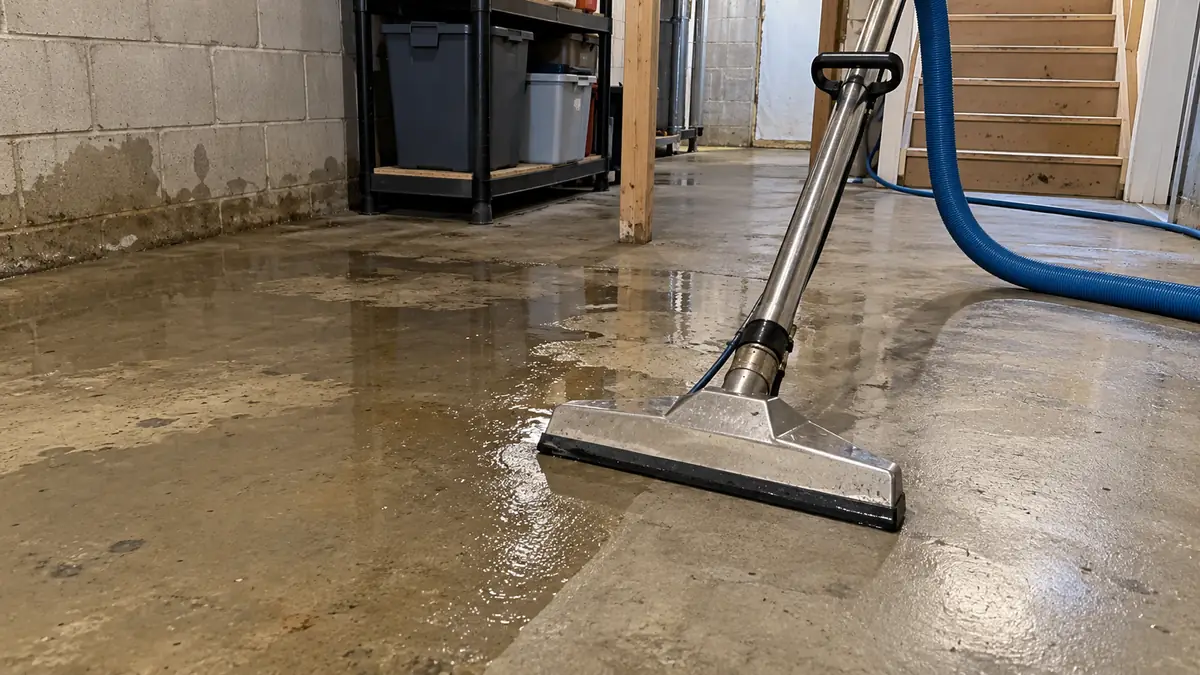
Atlas Total Home removes standing water, dries wet building materials, removes moisture from the air, and cleans affected surfaces. The team uses moisture meters to check drying progress.
Water can stay beneath flooring and inside walls after the puddles are gone. The cleanup team needs to check these areas and decide what can be dried and what needs to be replaced. The EPA’s cleanup guidance calls for checking and drying the floor beneath carpet and other flooring.
Before work starts, ask the team to explain what got wet, which materials need to come out, and how they’ll check that everything is dry before repairs begin.
How soon does your basement need to dry?
Start cleanup as soon as it’s safe. The EPA recommends drying water-damaged areas and items within 24 to 48 hours to help prevent mold.
A flooded basement may take longer to dry fully. The amount of water, the materials that got wet, and any leaks that haven’t been fixed can affect how long it takes.
Wait for the cleanup team to finish checking that the wet materials are dry before you move furniture back or close up walls. The floor can look dry while there’s still moisture underneath it.
If electrical equipment or your heating and cooling system got wet, have a qualified professional check it before you use it again.
How much does flooded basement cleanup cost?
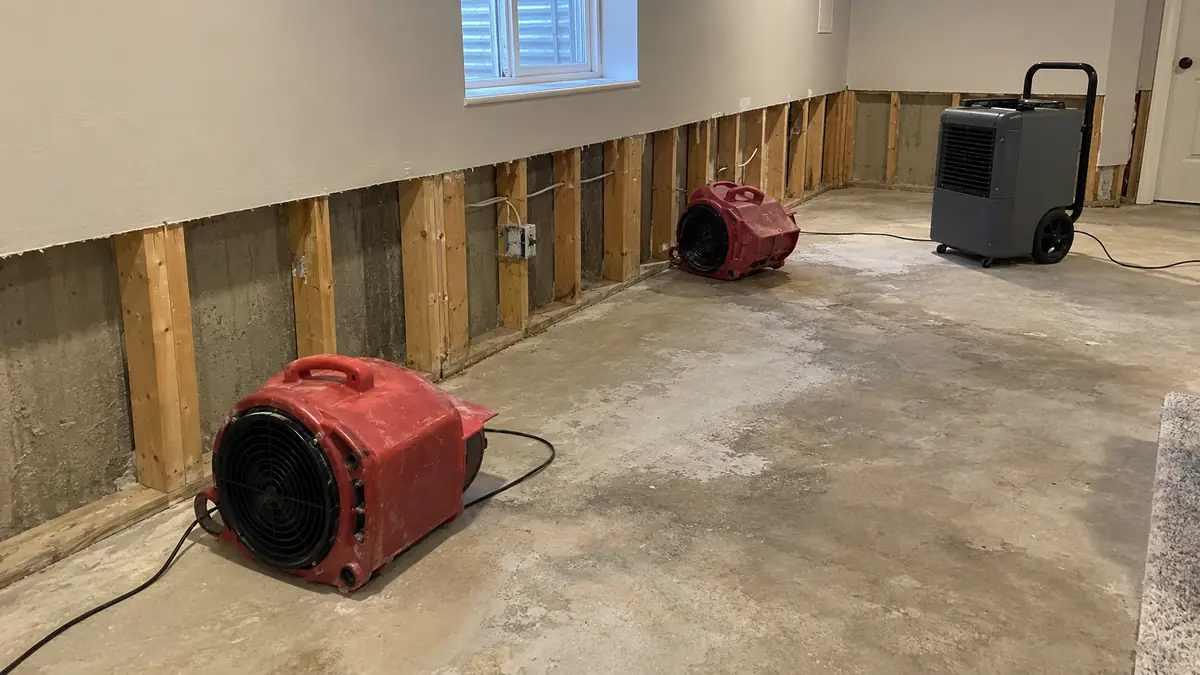
The cost depends on how much of the basement got wet and what needs to be cleaned, dried, or replaced. Wet carpet and drywall can add work that a small spill on concrete wouldn’t need. Sewage or dirty water can also change how the cleanup is done.
Atlas Total Home provides an estimate after checking the damage. Ask for a breakdown that covers drying equipment, cleanup, material removal, and disposal. Find out whether repairs are included and who will fix the pipe, pump, or drain that caused the flooding.
Will insurance cover a flooded basement?
Coverage depends on where the water came from and what your policy includes. A broken pipe inside your home may be covered by homeowners insurance, while flooding from outside is handled differently. Ask your insurer about your situation, including any sewer backup coverage and your deductible.
Keep photos, estimates, receipts, and drying records. Ask your insurer what they need before you throw away damaged belongings. You can call for cleanup help while you work through the claim. Don’t wait to deal with a safety hazard.
What to tell Atlas Total Home when you call
Give us your address, when you found the water, and where you think it’s coming from. Tell us whether water is still coming in and whether carpet, walls, or furniture got wet. Mention any sewage or water near electrical equipment.
Share what you can see from a safe place. If you aren’t sure what’s wrong, that’s okay. You don’t need to go into the basement to investigate before calling.
What if your basement keeps flooding after rain?
Have someone check why the water keeps getting in. The sump pump, yard drainage, window wells, or foundation may need work. Find out what’s causing it before paying for a repair, then arrange cleanup for anything that got wet.
Need help with a flooded basement? Call Atlas Total Home at 217-920-6911 for 24/7 water damage restoration in Danville and Vermilion County. For a non-emergency request, contact Atlas Total Home online.
