

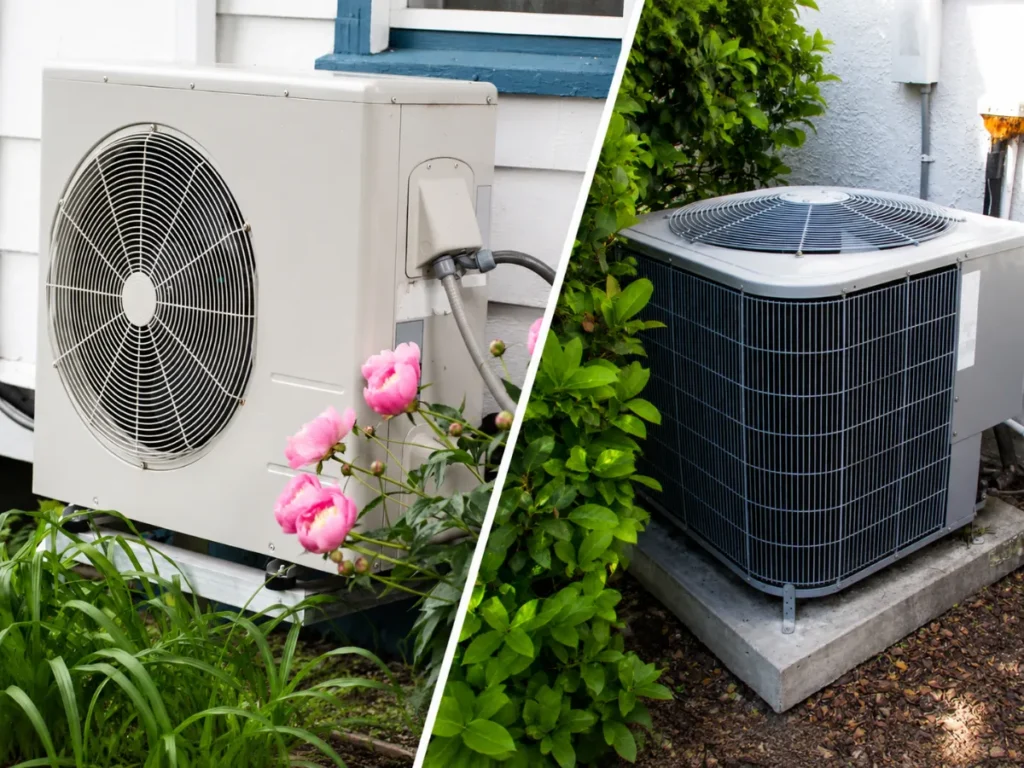
When comparing a heat pump vs air conditioner, both systems cool a home the exact same way during summer. The practical differences start to show when humidity spikes, winter arrives, and you decide whether you want a single electrified system or separate heating and cooling equipment.
This guide breaks down equipment performance, upfront costs, and local climate demands for homeowners across Vermilion County and East-Central Illinois.
Not sure which HVAC system fits your home layout? Schedule an in-person assessment before replacing your equipment.
What Is the Difference Between a Heat Pump and a Central AC?
A central air conditioner operates in one direction: it absorbs heat from inside your home and rejects it outside through the refrigeration cycle. It provides cooling and dehumidification during summer, relying on a standalone furnace to handle winter heating.
A heat pump uses the same refrigeration cycle to cool your home in the summer. However, a reversing valve allows it to run backwards in the winter by extracting ambient heat from outdoor air and transferring it indoors. Since a heat pump moves heat rather than generating it by burning fuel, it works as both an air conditioner and an efficient primary heating unit.
Can a Heat Pump Handle Central Illinois Humidity?
Yes. In standard cooling mode, a heat pump delivers identical cooling performance to a traditional central AC with equal tonnage and SEER2 ratings.
Humidity removal depends heavily on compressor operation:
- Single-stage systems run at 100% capacity before shutting off completely, leading to short cycles that leave lingering moisture in the air.
- Variable-speed systems (such as American Standard units installed by Atlas) ramp up and down continuously at lower speeds. This continuous airflow moves air across the cold evaporator coil longer, pulling substantially more moisture out of the living space without overcooling the home.
Heat Pump vs Central AC and Furnace: Cost, Specs, and Lifespan
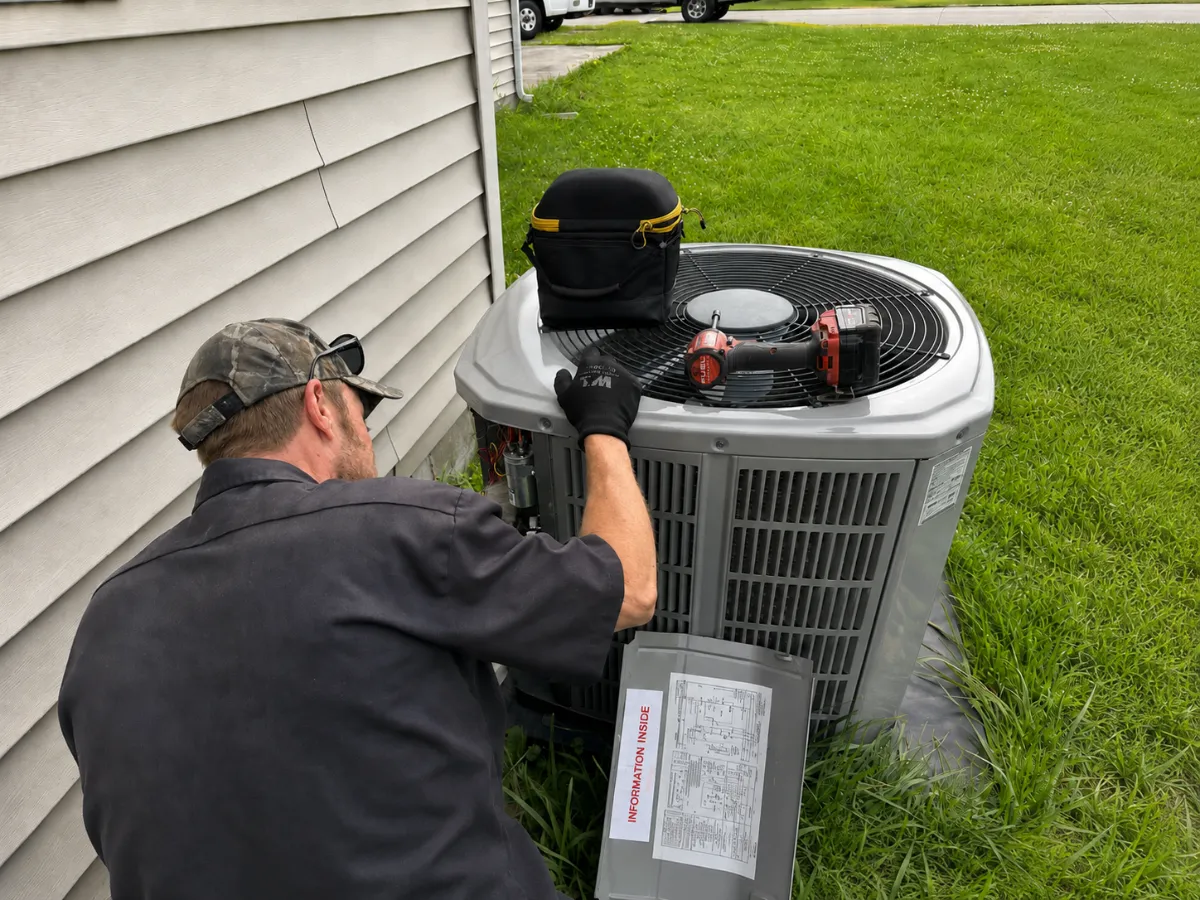
Because a heat pump provides both heating and cooling, compare its installed cost against a combined AC and furnace replacement, not just an AC alone.
| Feature | Heat Pump | Central AC + Gas Furnace |
|---|---|---|
| Primary Function | All-in-one heating and cooling | Cooling only (paired with separate gas furnace) |
| Average Installed Cost | $10,000 – $25,000 (replaces both heating and cooling units) | $5,000 – $8,300 (AC only) / $9,000 – $16,000+ (AC + Furnace) |
| Energy Source | All-electric | Electric cooling + Natural gas or propane heat |
| Humidity Removal | High (optimal on variable-speed inverter models) | Moderate to high (depends on single-stage vs variable-speed) |
| Sub-Zero Winter Performance | Requires dual-fuel gas furnace or auxiliary heat strips below ~20°F | Furnace provides steady heat output regardless of outdoor temps |
| Equipment Lifespan | 15 – 20 years (runs year-round) | 15 – 20 years per independent unit |
If your gas furnace is relatively new and running reliably, opting for an air conditioner replacement is often the most cost-effective path. If both pieces of equipment are past their prime, pricing a dual-fuel heat pump system provides the highest seasonal efficiency.
Winter Reliability: Why Central Illinois Needs a Dual-Fuel Setup
Modern cold-climate heat pumps maintain efficiency well into sub-freezing temperatures. However, during severe Midwestern cold snaps where outdoor temperatures drop below 0°F, heat pumps lose heating capacity and coefficient of performance (COP).
For homes in Danville and Vermilion County, the most reliable setup is dual fuel:
- The electric heat pump handles cooling in summer and efficient heating through mild fall and winter days down to roughly 25°F–30°F.
- A secondary backup heat source (typically an existing or new high-efficiency gas furnace) automatically kicks in during sub-zero temperatures.
This configuration eliminates the risk of high electric resistance bills while keeping heating reliable when outdoor conditions turn extreme. (If your existing unit ever cuts out during a winter storm, review our guide on what to do if your furnace dies in sub-zero weather).
Ductwork Sizing and Airflow Requirements
Heat pumps deliver air at slightly lower supply temperatures (around 90°F to 100°F) compared to the hotter blasts produced by gas furnaces (120°F to 135°F). To deliver equivalent heating BTUs, heat pumps often require higher airflow volumes (CFM).
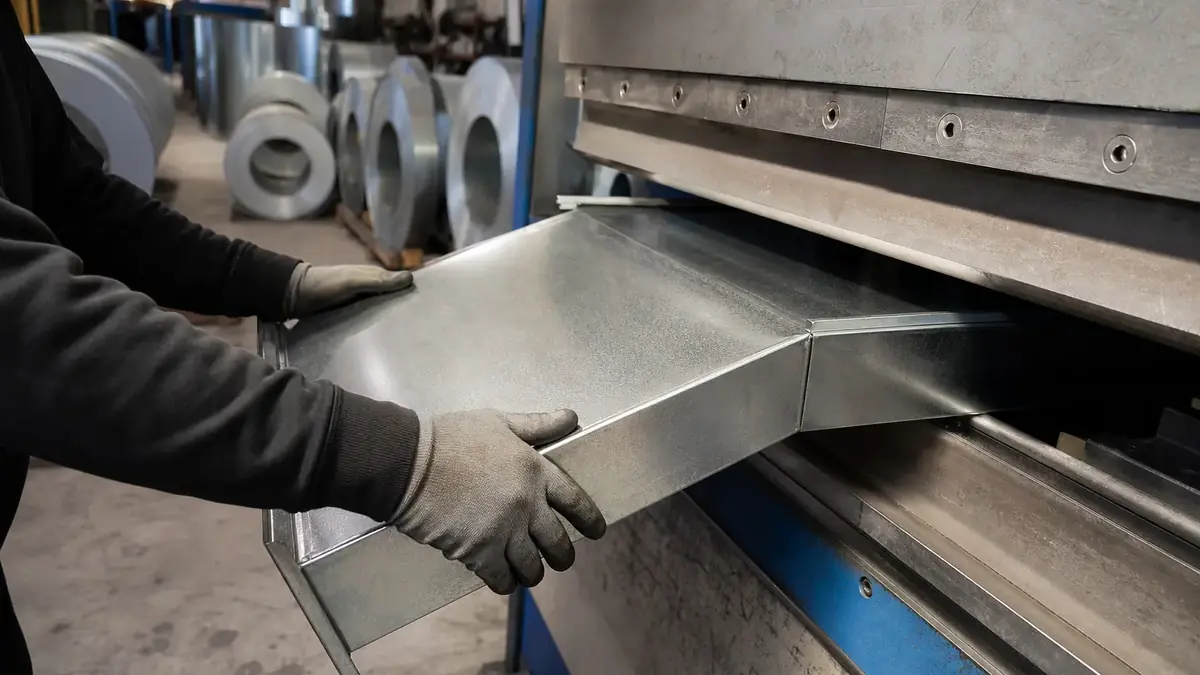
If existing ductwork is undersized, static pressure increases, stressing the blower motor and reducing efficiency. Atlas designs and fabricates duct transitions in our in-house sheet metal shop, allowing any necessary airflow corrections to happen during the primary installation without third-party scheduling delays.
Incentives, Rebates, and Financing
While an air-source heat pump carries a higher initial equipment cost than a baseline AC condenser, utility incentives directly offset the gap:
- Ameren Illinois Incentives: Qualifying residential electric customers can receive instant point-of-sale discounts (up to $900 on qualifying ducted air-source heat pumps or $630 on ductless mini-splits) applied directly through participating contractors, like Atlas Total Home. Review our breakdown of Ameren rebates for Danville homeowners or our overview of Ameren energy efficiency programs.
- System Financing: Homeowners can also take advantage of flexible HVAC financing options to spread installation costs into predictable monthly payments.
How Atlas Sizes and Installs Your System
- Manual J Load Calculation: We evaluate home square footage, insulation levels, window exposure, and envelope leakage rather than relying on rough sizing estimates.
- Static Pressure & Duct Evaluation: We inspect supply and return plenums to verify your duct system can distribute required CFM without restriction.
- Straightforward System Pairing: We evaluate whether a standalone AC replacement or a dual-fuel heat pump best matches your utility rates and comfort goals.
- In-House Metal Fabrication: Our fabrication technicians build any necessary duct transitions directly to ensure balanced airflow.
- Commissioning & Warranty Registration: We verify refrigerant charge, airflow, and staging controls, filing manufacturer warranties directly on your behalf.
Choosing the Right System for Your Home
If your furnace is under 8–10 years old and operating efficiently, replacing only the air conditioning condenser is usually the simplest decision. If your heating and cooling equipment are both reaching the end of their operational lifespans, a dual-fuel heat pump provides superior summer dehumidification, reduced fossil fuel usage, and instant utility incentives.
Explore our complete heating and air conditioning services in Danville to see all available configurations.
Ready to evaluate real equipment numbers for your home?
Frequently Asked Questions
Does a heat pump keep up during an Illinois winter?
Yes, when configured with appropriate auxiliary or dual-fuel backup heat. Modern cold-climate units handle heating down into freezing temperatures, while a paired gas furnace or electric strip heater provides supplemental heat during extreme negative-degree cold snaps.
Is a heat pump more expensive than an air conditioner?
Standalone heat pump equipment typically runs $1,000 to $2,500 more than an equivalent standard AC. However, because a heat pump functions as both your heating and cooling plant, it replaces the cost of buying both a standalone AC and a standalone furnace.
What incentives are available through Ameren Illinois?
Ameren Illinois electric customers working with an approved contractor can qualify for instant point-of-sale discounts: up to $900 for qualifying centrally ducted air-source heat pumps and up to $630 for ductless mini-split units.
Will a heat pump lower monthly energy bills?
Operational savings depend on your fuel setup. If you currently heat with propane or electric baseboards, an air-source heat pump will substantially cut winter heating costs. If you heat with natural gas, a dual-fuel hybrid system allows you to automatically switch between gas and electric heat based on fluctuating utility rates.
Does a heat pump dehumidify as well as an air conditioner?
Yes. Heat pumps use the same refrigeration components as an AC to extract moisture. Variable-speed heat pumps maintain low, continuous airflow that pulls significantly more water vapor out of the air than standard single-stage cooling systems.
